Stadium Atlas 2026
Atlas Format FAQ Travel Tips Contact
11 June – 19 July 2026

Sixteen cities. Three nations. One continental atlas.

Stadium Atlas 2026 maps every host venue of the upcoming World Cup — from the deserts of Texas to the altitude of Mexico City and the lakeshore of Toronto. Pure architecture and tournament context, no betting noise.

Featured: MetLife Stadium, host of the 2026 final on 19 July.

Browse the 16 venues View format
48
Nations
16
Host cities
104
Matches
39
Days of football

The Sixteen Host Stadiums

Filter by country, scan the capacity and climate, see what each ground will host. Data compiled by the Stadium Atlas 2026 editorial desk from public sources.
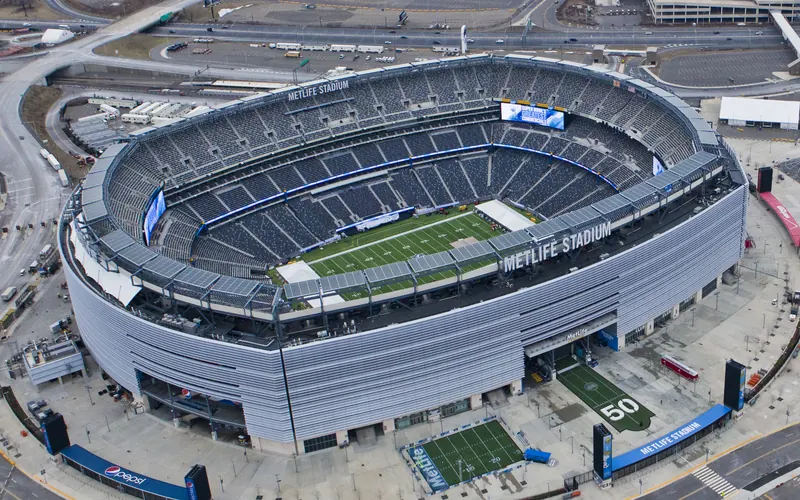
MetLife Stadium, East Rutherford

MetLife Stadium

East Rutherford, New Jersey
USA
82,500
Capacity
2010
Opened

Shared home of the Giants and the Jets. Wide bowl with a dramatic translucent skin lit in team colours.

GroupR16Final
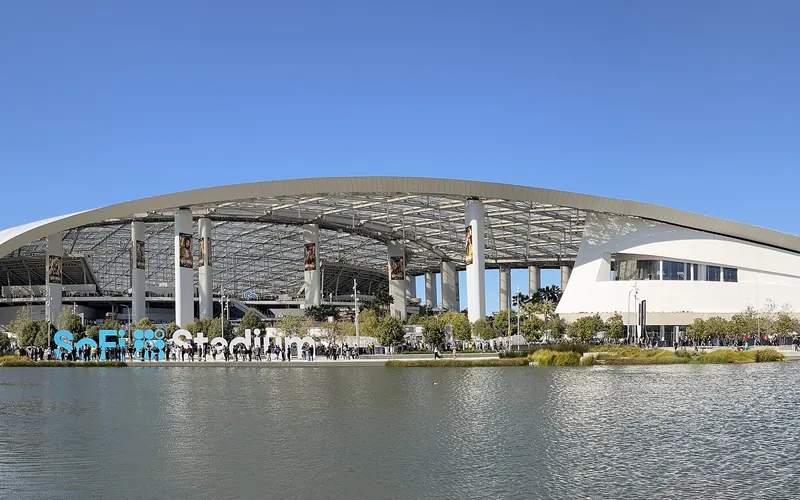
SoFi Stadium exterior, Inglewood

SoFi Stadium

Inglewood, California
USA
70,240
Capacity
2020
Opened

An indoor-outdoor hybrid under a translucent canopy. The newest venue in the rotation by a clear margin.

GroupR32
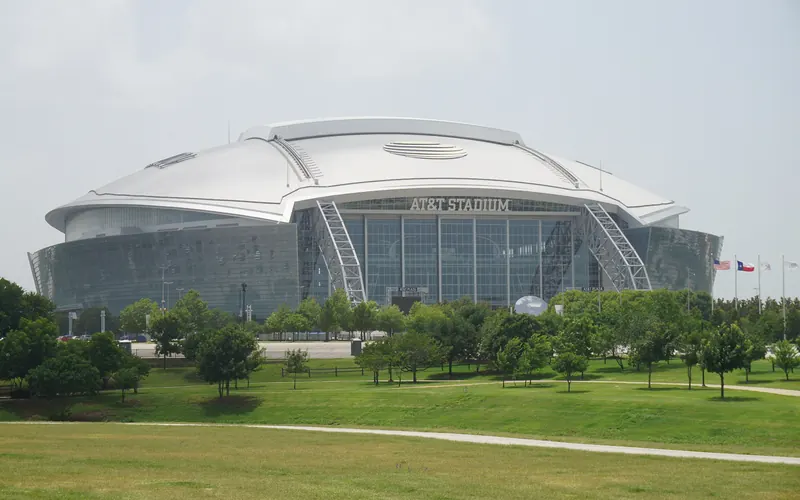
AT&T Stadium, Arlington Texas

AT&T Stadium

Arlington, Texas
USA
80,000
Capacity
2009
Opened

Retractable roof, an enormous central video board and Texas heat held at bay by industrial-scale climate control.

GroupR32R16
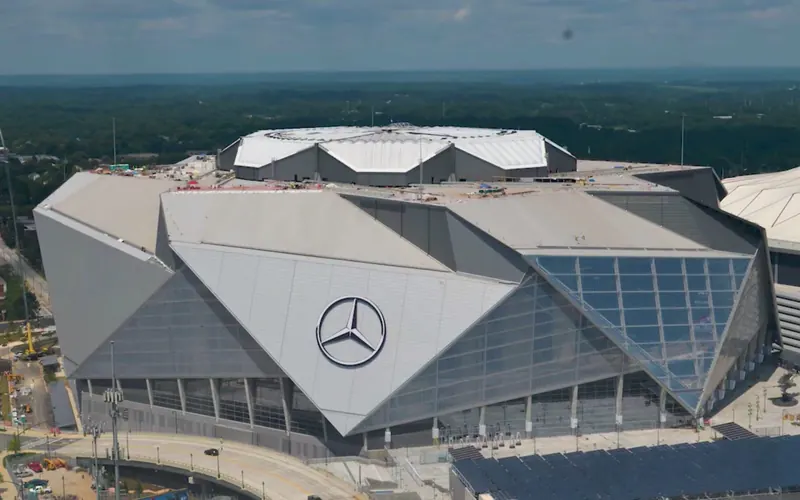
Mercedes-Benz Stadium roof, Atlanta

Mercedes-Benz Stadium

Atlanta, Georgia
USA
71,000
Capacity
2017
Opened

A petal-style retractable roof and a halo board. Already a familiar football venue for Atlanta United supporters.

GroupR16Semi-final
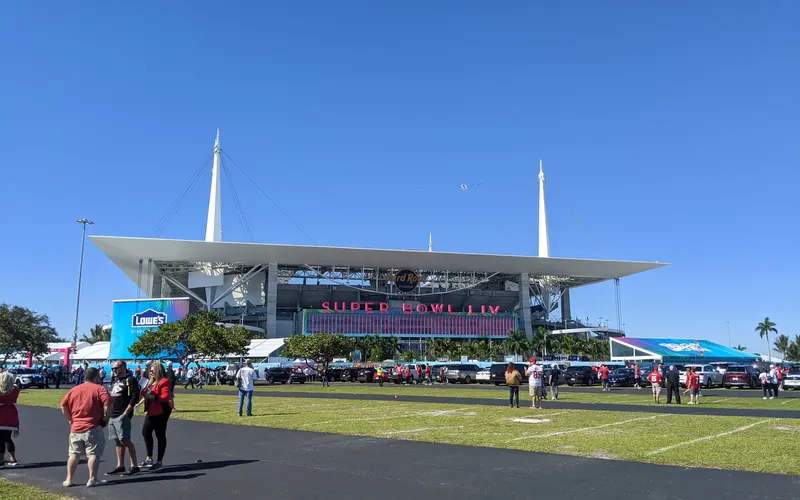
Hard Rock Stadium, Miami Gardens

Hard Rock Stadium

Miami Gardens, Florida
USA
65,000
Capacity
1987
Opened

A South-Florida coliseum with a wraparound canopy added in 2016. Humidity is the visiting team nobody expects.

GroupR32
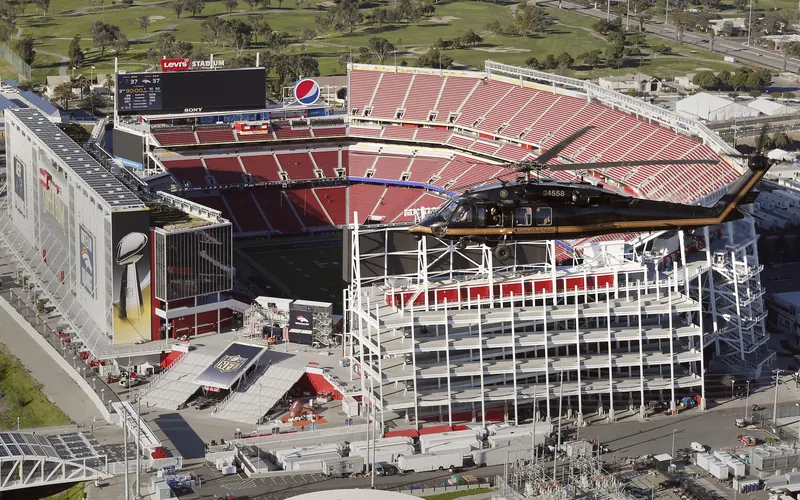
Levi's Stadium, Santa Clara

Levi's Stadium

Santa Clara, California
USA
68,500
Capacity
2014
Opened

Bay-Area sun belt with a green roof and solar bridges. Tech park aesthetics, asymmetrical seating bowl.

GroupR32
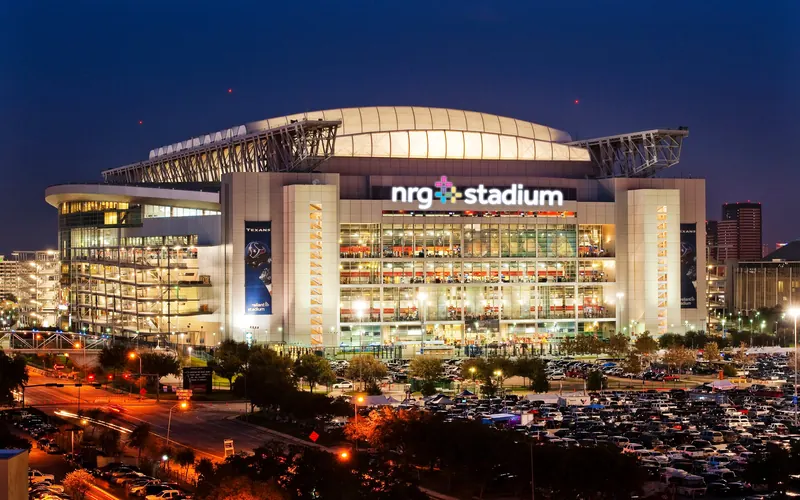
NRG Stadium, Houston

NRG Stadium

Houston, Texas
USA
72,220
Capacity
2002
Opened

First retractable roof in the NFL. Gulf-coast heat and air-conditioning combine for a peculiar microclimate.

GroupR32
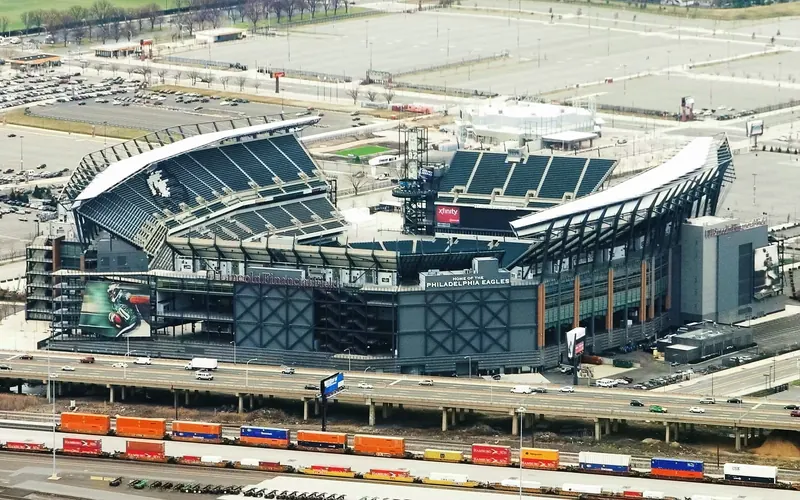
Lincoln Financial Field aerial, Philadelphia

Lincoln Financial Field

Philadelphia, Pennsylvania
USA
69,800
Capacity
2003
Opened

A loud open bowl on South Broad Street, deep in a sports-park district shared with three other major venues.

GroupR32
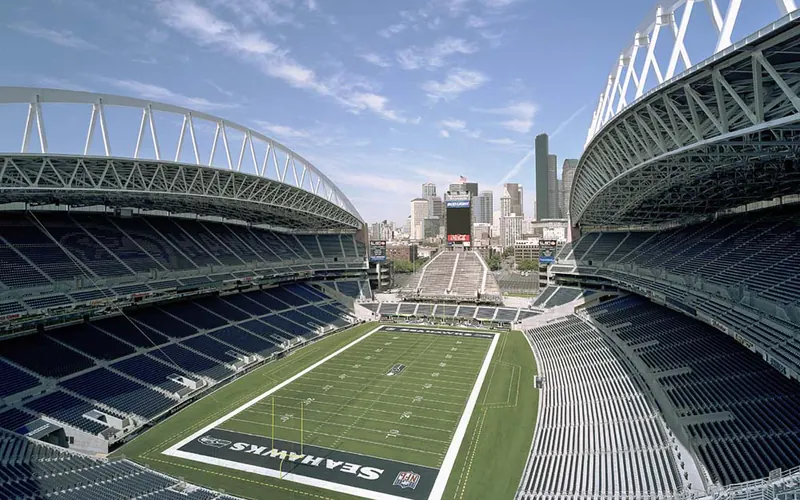
Lumen Field, Seattle

Lumen Field

Seattle, Washington
USA
68,740
Capacity
2002
Opened

Sounders country. A partial roof traps Pacific Northwest noise — record decibel readings for an outdoor venue.

GroupR32
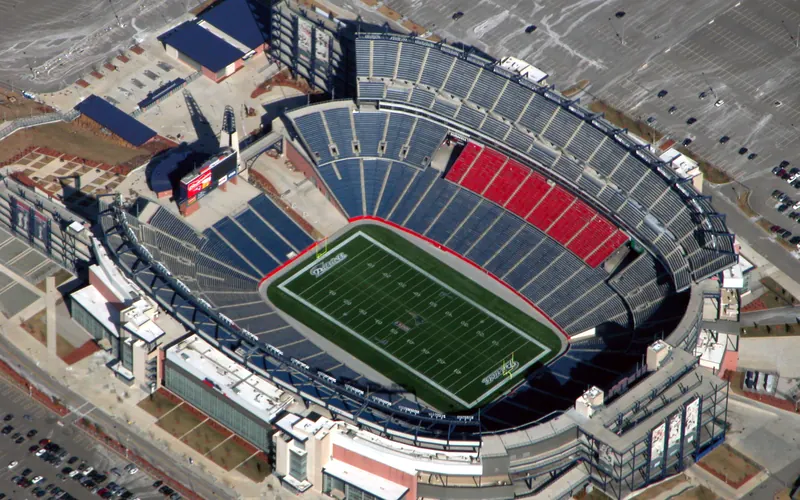
Gillette Stadium top view, Foxborough

Gillette Stadium

Foxborough, Massachusetts
USA
65,880
Capacity
2002
Opened

A lighthouse, an arched bridge and a wide-open New England sky. The Patriots' yard, also home to the Revolution.

GroupR16
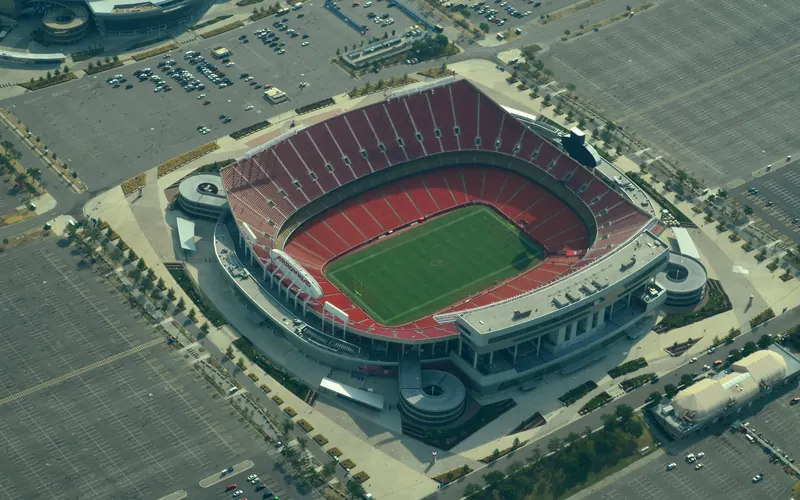
Arrowhead Stadium aerial, Kansas City

Arrowhead Stadium

Kansas City, Missouri
USA
76,640
Capacity
1972
Opened

The oldest American venue in the rotation. A monolithic ring of concrete that turns into a wall of sound on match days.

GroupR32
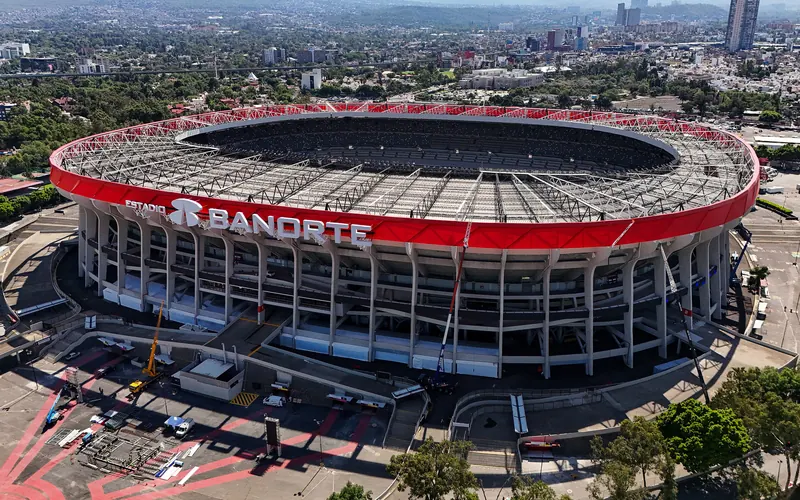
Estadio Azteca aerial, Mexico City

Estadio Azteca

Mexico City
MEX
87,520
Capacity
1966
Opened

First ground to host a World Cup opener three times. Two-tier concrete bowl at 2,240 metres above sea level.

OpenerGroup
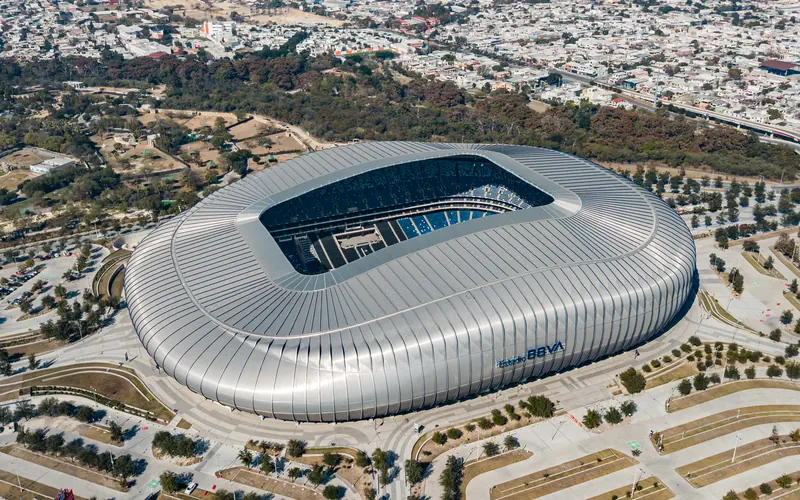
Estadio BBVA, Monterrey

Estadio BBVA

Monterrey
MEX
53,500
Capacity
2015
Opened

Steel-clad bowl framed by the Cerro de la Silla mountain. A neat geometric silhouette, especially at dusk.

GroupR32
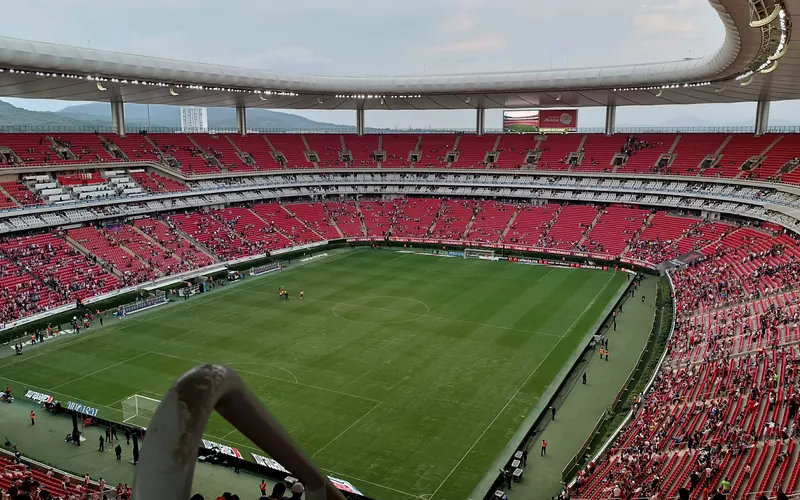
Estadio Akron, Guadalajara

Estadio Akron

Guadalajara, Jalisco
MEX
49,850
Capacity
2010
Opened

A volcano-shaped ring of grass embankments. Home of Chivas — perhaps the cleanest architectural statement on the list.

Group
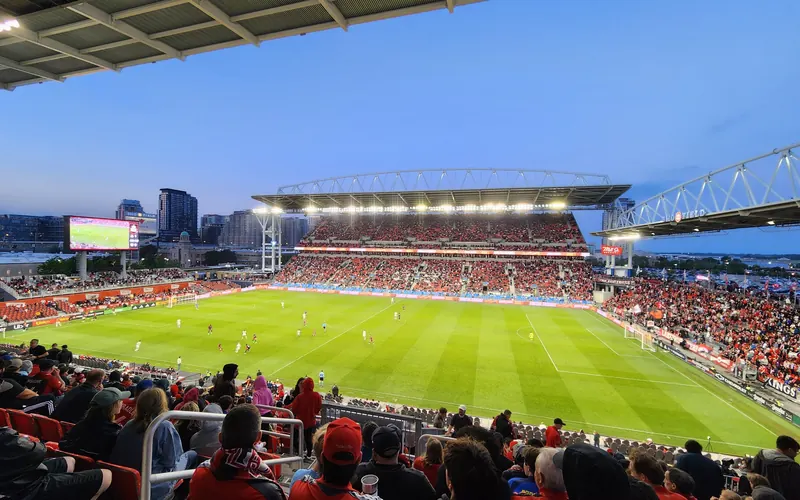
BMO Field, Toronto

BMO Field

Toronto, Ontario
CAN
45,000
Capacity
2007
Opened

A tournament-time expansion lifts capacity for the World Cup. Lakeside, with Toronto's skyline as a constant backdrop.

GroupR32
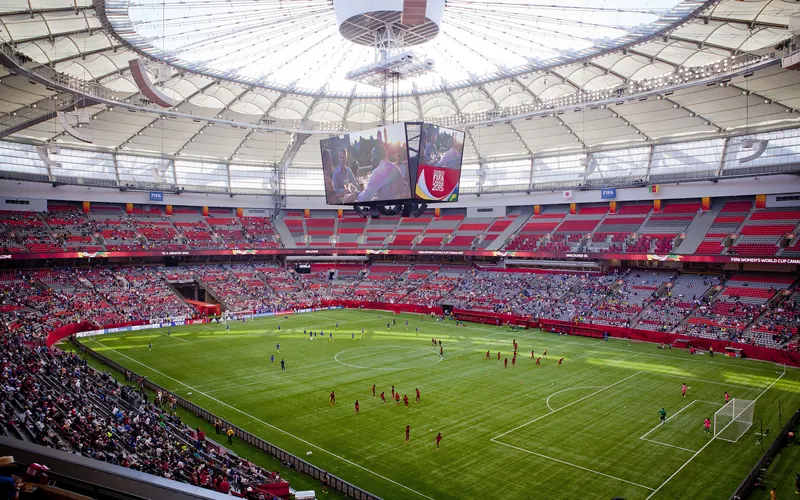
BC Place stadium, Vancouver

BC Place

Vancouver, British Columbia
CAN
54,500
Capacity
1983
Opened

Retractable cable-supported roof — among the largest of its kind in the world. Downtown, two blocks from the waterfront.

GroupR16

Three Host Nations

A first World Cup spread across three countries. Stadium Atlas 2026 treats each nation's contribution on its own terms.

United States

Atlanta · Boston · Dallas · Houston · Inglewood · Kansas City · Miami · East Rutherford · Philadelphia · Santa Clara · Seattle

The bulk of the tournament — 11 stadiums, the final, both semi-finals and the largest share of knockout fixtures. Time zones span four hours from coast to coast.

Mexico

Mexico City · Guadalajara · Monterrey

The opening ceremony returns to Estadio Azteca for the third time in tournament history. Altitude, heat and a deep football culture distinguish the Mexican leg.

Canada

Toronto · Vancouver

A debut as host on the men's side. Two venues, both temporarily expanded — one open to the lake, one tucked under a translucent dome.

Tournament Format at a Glance

A first 48-team World Cup. New round of 32 between the group stage and round of 16, lengthening the bracket but keeping every match a knockout.

Stage Teams Matches Window
Group stage 48 → 32 72 11 Jun – 27 Jun
Round of 32 32 → 16 16 28 Jun – 3 Jul
Round of 16 16 → 8 8 4 Jul – 7 Jul
Quarter-finals 8 → 4 4 9 Jul – 11 Jul
Semi-finals 4 → 2 2 14 Jul – 15 Jul
Third-place play-off 2 1 18 Jul
Final 2 1 19 Jul · MetLife Stadium

Frequently Asked Questions

Compact answers about the venues, the format and the Stadium Atlas 2026 editorial approach.

How many host cities are there at the 2026 World Cup?

Sixteen — eleven in the United States, three in Mexico and two in Canada. Stadium Atlas 2026 covers every one of them with a dedicated card on the home page.

Where is the final being played?

At MetLife Stadium in East Rutherford, New Jersey, on 19 July 2026. The semi-finals are split between Mercedes-Benz Stadium in Atlanta and AT&T Stadium in Arlington.

Why a 48-team tournament now?

FIFA expanded the field from 32 teams to 48 to widen continental representation. The new round of 32 inserts an extra knockout step, so the tournament is longer but no group winner skips the bracket.

What is the highest-altitude venue?

Estadio Azteca in Mexico City at roughly 2,240 metres above sea level — high enough that visiting teams typically schedule a short acclimatisation block before kick-off.

Does Stadium Atlas 2026 sell tickets or accept commercial partnerships?

No. The atlas is an independent editorial project. We do not sell tickets, run betting integrations or accept paid placement inside venue cards.

Where do the facts and figures come from?

Capacities, build dates and fixture lists are compiled from public FIFA materials and official venue pages. Anything that changes after publication will be reflected in the next site update.

Stay in the loop

Get the Stadium Atlas dispatch

A short note every time we add a venue update, a travel guide or a tournament-format change. No spam, unsubscribe in one tap, no third-party resale of your address.

  • · Match-day previews for each host city
  • · Stadium opening and expansion news
  • · Travel tips written by independent contributors
Thanks — we have your details. Watch your inbox for the next Stadium Atlas update.